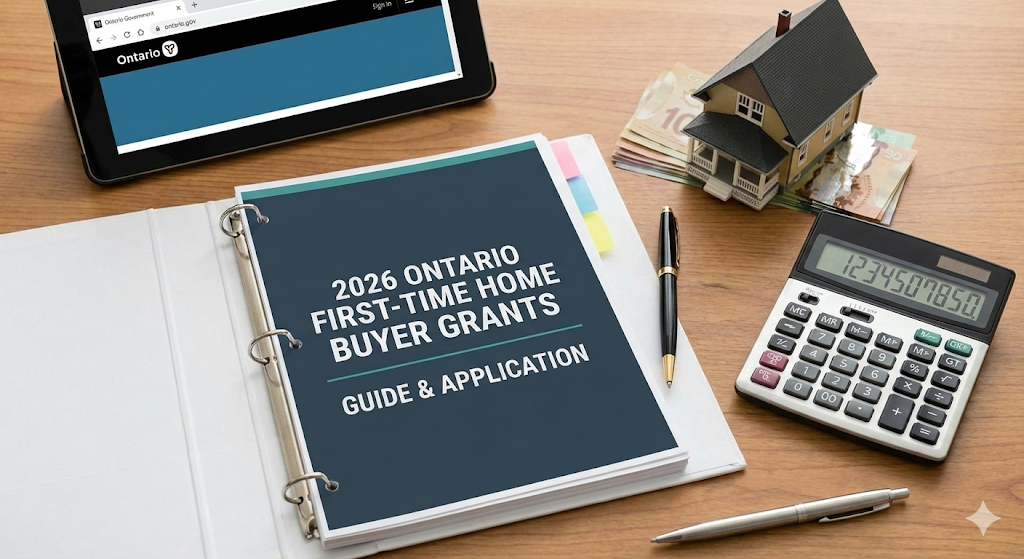

Navigating Ontario First-Time Buyer Grants for 2026
As the calendar approaches 2026, many prospective first-time home buyers in the Greater Toronto Area (GTA) and across Southern Ontario are searching specifically for new grant programs designed to ease the financial burden of homeownership. While specific, brand-new 2026 grants with dedicated funding budgets have not been formally announced, assistance typically comes in the form of existing, critical rebates and federal programs that are highly expected to continue.
While specific 2026 budget announcements are not yet official, the cornerstone programs are robust and expected to continue. Understanding these mechanisms is essential for any middle-class family trying to enter the market.
The Cornerstone of Provincial Support: Land Transfer Tax Rebates
The most tangible, direct financial relief offered by the Province of Ontario comes through the Land Transfer Tax (LTT) Rebate. This is not a grant in the traditional sense, but rather a reduction or elimination of the tax owed on closing, which amounts to a substantial saving.
The most important direct grant available to first-time buyers is the Ontario Land Transfer Tax Rebate. This program provides up to $4,000 back to eligible first-time buyers. Given that the LTT can often exceed $10,000 or $15,000 on higher-priced homes common in the GTA, this rebate significantly reduces closing costs.
It is crucial to note that purchasing property within the City of Toronto triggers a double Land Transfer Tax obligation (Municipal and Provincial). While the provincial rebate applies everywhere, Toronto offers its own separate rebate to first-time buyers, which also helps offset the higher municipal tax. For details on the provincial rules, consult the official guide from the Ministry of Finance here.
Essential Federal Programs Carrying into 2026
While province-specific grants might be limited, federal initiatives play a massive role in enhancing affordability for Ontario residents. These are critical components of any 2026 financial plan:
### 1. The First Home Savings Account (FHSA)
The FHSA remains arguably the most powerful tool available. This hybrid registered account allows eligible buyers to save up to $40,000 tax-free for their first home. Contributions are tax-deductible (like an RRSP), and withdrawals for a home purchase are non-taxable (like a TFSA).
### 2. The Home Buyers Plan (HBP)
The HBP allows first-time buyers to withdraw up to $35,000 from their Registered Retirement Savings Plans (RRSPs) to put towards a down payment. This money is borrowed and must be repaid over a 15-year period. It is often used in conjunction with the FHSA, providing a strong combined savings pool.
The Reality of Affordability in Southern Ontario
For the middle-class buyer targeting entry-level homes—condos or townhouses in the GTA, Hamilton, or Ottawa—the provincial rebates are necessary, but rarely enough to cover the entire cost gap. The average price of housing across the Golden Horseshoe means buyers often require large down payments, typically exceeding the $4,000 rebate provided by the province.
The Land Transfer Tax Rebate currently caps at $4,000, a welcome relief but often insufficient given the median GTA home price. Many advocacy groups continue to pressure the government to raise this cap to reflect current market realities, a potential policy change buyers should watch for as the 2026 budget cycles approach. For current market context and median price trends in Ontario, reference external data sources like the Canadian Real Estate Association CREA reports.
Preparing Now for a 2026 Purchase
If your goal is to buy in 2026, focus on maximizing your registered savings accounts and ensuring you qualify for the existing provincial rebates. The financial landscape is highly competitive, and preparedness is the key to minimizing costs and securing financing.
Securing pre-approval and maximizing your FHSA contributions today are the best strategies for entering the 2026 Ontario market.